
Statement by His Excellency Dr. Mohammed Abdul Latif Khalifa Secretary General of the Executive Council
- Source: Emirates News Agency (WAM)
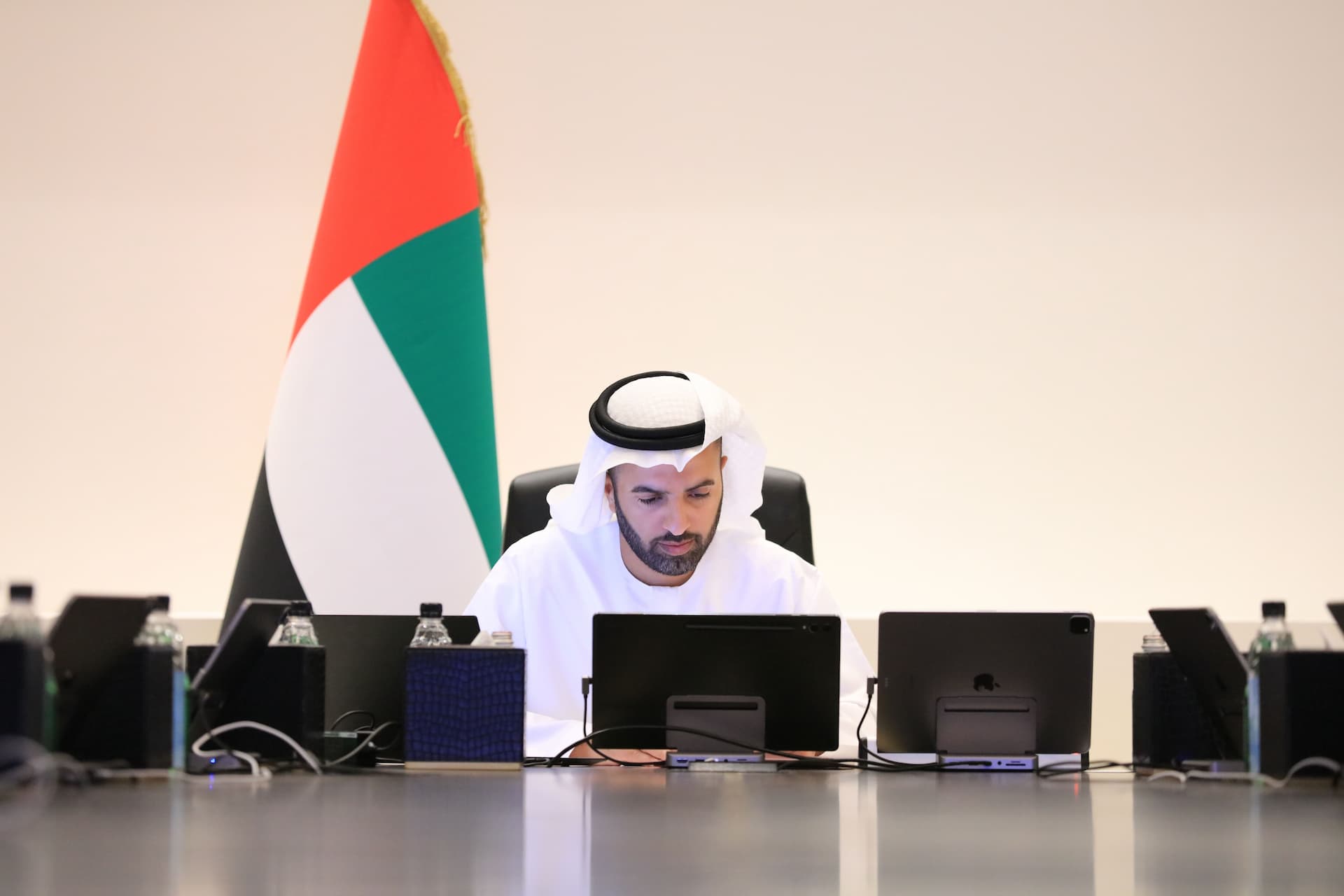
The Executive Council of the Emirate of Ras Al Khaimah held its first regular meeting for the year 2024 under the chairmanship of His Highness Sheikh Mohammed bin Saud Al Qasimi, Crown Prince and Chairman of the Executive Council. The Council discussed various issues, topics, and reports related to the completion and updating of the legislative system, monitoring the developments and challenges of economic development, efforts to achieve digital transformation plans, adoption of artificial intelligence technologies, assessment of strategic government performance, adoption of government and sectoral committee formations, prospects for developing the health and safety system, and reviewing government spending indicators within the government's budget for 2024.
The meeting discussed the report presented by the Economic Committee, which reviewed the results of the Events Committee's work and the most significant achievements made and ways to enhance its work to provide a distinguished experience in this regard. The Council also addressed the main challenges facing the contracting and car rental sectors, urging coordination of efforts among relevant government entities to develop necessary solutions and policies to overcome all obstacles hindering the growth of these sectors and enhance their contribution to the GDP. The report also included the latest developments in the work of the Labor Accommodation Systems Development Committee regarding designing the customer journey for licensing labor accommodations according to the best standards and setting appropriate conditions for organizing and distributing labor accommodation sites to achieve the desired economic and social goals. In this regard, the Council approved the preparation of an executive regulation for Law No. (8) of 2021 regarding regulating certain properties in the Emirate, authorizing the Municipality Department to take necessary actions to rectify the status of non-compliant labor accommodations and impose appropriate penalties.
In the context of improving the business environment, enhancing the emirate's competitiveness, and attracting foreign investments, the Council was briefed on the results of the cost of doing business study in the Emirate in light of benchmark comparisons. It directed the design of supportive initiatives and the submission of recommendations to the Executive Council on this matter based on the opportunities identified in the study.
In line with the rapid technological advancements and achieving digital transformation targets in government work, the Electronic and Smart Transformation Committee report reviewed the efforts and projects of the customer journey in obtaining government services. The Council approved the timeline for providing digital government services and their interoperability through the Ras Al Khaimah Digital Platform. The Council also reviewed the progress of projects transitioning to cloud solutions according to the strategy prepared for this purpose and the frameworks of partnership with leading entities in this field. In alignment with the technologies of the Fourth Industrial Revolution and their utilization to enhance government performance, the Council was briefed on the pioneering project "Smart Judge," which uses artificial intelligence techniques to assist judges in judicial institutions in issuing automated judgments. The report also highlighted the commencement of work on implementing the "Copilot" system adoption plan developed by Microsoft 360 to support executive operations in the government and enhance the efficiency of administrative task completion.
The Council reviewed the report of the Legislative Committee, where it was briefed on the set of local laws and resolutions accomplished during 2023. These include the Unified Electronic System Law for Vehicle Licensing and Insurance, the amendment of Law No. (2) of 2017 regarding the establishment of Ras Al Khaimah Economic Zones, the Vehicle Impoundment and Deposit Law, the Land Surveying Law, the Real Estate Development Regulation Law, the Maritime Vessels Licensing and Operation Law, the Real Estate Appraisal Profession Regulation Law, the Parking Regulation Law, the Executive Regulation for Vehicle Impoundment and Deposit, and the Executive Regulation for Demolition and Removal Works. The Council also approved the project schedule for local laws and resolutions for 2024 under progress and directed for their expedited issuance. Moreover, the Council approved the updated mechanism for issuing government legislation to ensure the issuance of proactive and comprehensive legislations that align with the emirate's strategic vision. Additionally, the preparation of a legislative concept regarding the licensing of tobacco cultivation, manufacturing, and trading was endorsed.
The council reviewed the memorandum submitted by the Finance Department regarding the sectoral distribution of government spending according to the Financial Reserve Fund. Statistics indicate an allocation of (32%) for the infrastructure sector, (25%) for general government services, (23%) for the justice, security, and safety sector, (12%) for social development, education, health, and culture, and (7%) for government development and digital transformation projects.
In an effort to enhance the environmental, health, and public safety system in the emirate, the council reviewed the memorandum submitted by the Environment and Development Protection Authority regarding the current status and future development prospects of the system to comply with best practices and enhance community health and safety. The council directed the Health, Environment, and Safety Committee to intensify coordination and partnerships among all relevant parties to unify efforts, prevent duplication, ensure compliance with standard and international regulations, and optimize the use of available resources. Additionally, the council emphasized the expansion of planting ghaf trees and conducting necessary experiments regarding the possibility of planting certain imported varieties in selected areas of the emirate.
As part of the governance of the government's strategic plan and strategic government performance review, the council reviewed the performance indicators achievement results for 2023 and commended the efforts of government entities in achieving expected targets. It instructed to work on enhancing efforts to prepare and accomplish indicators for 2024 in a manner that supports the vision of Ras Al Khaimah 2030 and contributes to achieving developmental aspirations and priorities.
The council also approved the formation of several government committees in accordance with legal and regulatory requirements. It endorsed the restructuring of sectoral committees under the council, consisting of the Economic Committee chaired by Dr. Abdulrahman Al Shaib, Director General of the Economic Development Department; the Digital Transformation Committee chaired by Engineer Ahmed Al Sayyah, Director General of the Electronic Government Authority; and the Environment, Health, and Safety Committee chaired by Dr. Saif Al Ghais, Director General of the Environment Protection and Development Authority.
Furthermore, the council approved the formation of the Permanent Events Committee chaired by Mohamed Moussa Lwajab from the Tourism Development Authority and the Petroleum Products Trading Regulation Committee chaired by Mohamed Mahmoud, Assistant Director General of the Economic Development Department. The council directed these committees to intensify their work and adopt innovative and pioneering methods to accomplish their tasks in line with the comprehensive developmental renaissance of the emirate.