

Ras Al Khaimah Executive Council Holds Extraordinary Meeting on the Sidelines of UAE Government Annual Meetings 2024
- Source: Emirates News Agency (WAM)
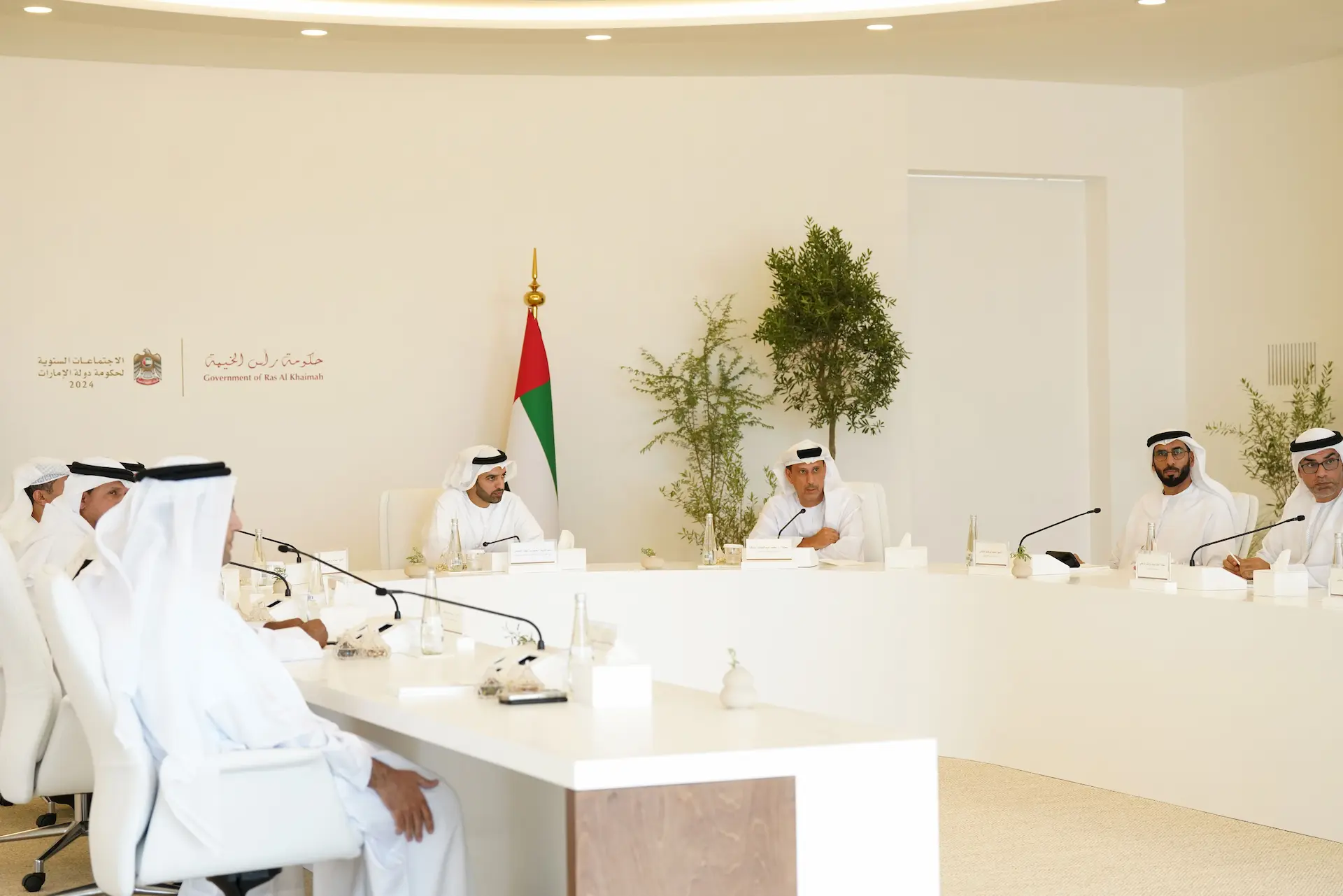
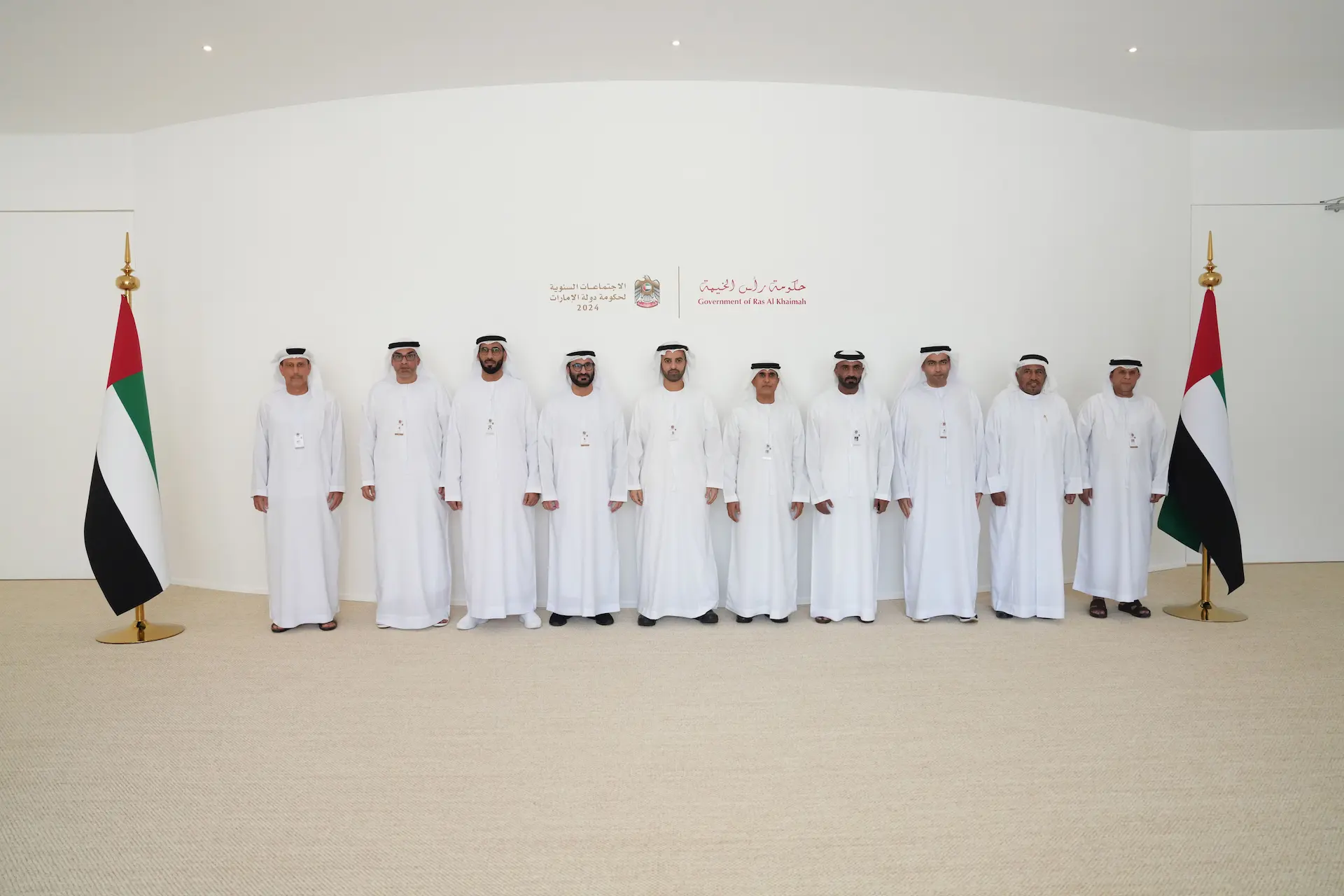
On November 5, 2024, the Executive Council of the Ras Al Khaimah Government held an extraordinary meeting on Saadiyat Island in Abu Dhabi, on the sidelines of the UAE Government Annual Meetings 2024. The meeting was chaired by His Highness Sheikh Mohammed bin Saud Al Qasimi, Crown Prince of Ras Al Khaimah and Chairman of the Council.
The Council discussed several important topics, including economic development, environmental sustainability, digital transformation projects, and the effective partnership between the federal and local governments.
His Highness praised the efforts of the federal government in organizing this leading national gathering, which has become an inspiring model for integration, cohesion, and cooperation among the components of the government system, strengthening the pillars of the union and enhancing the sustained development journey in the country.
He emphasized the unification of governmental efforts at all levels, including translating the strategic vision of our wise leadership to build a prosperous and promising future for the nation and its citizens. He also expressed his aspiration to achieve high-quality outcomes and establish a solid partnership across various fields, keeping pace with the latest developments on the national front.
The Council reviewed the report of the Economic Committee, which included enhancing the work of the committee supporting events, and backing its plans and programs to achieve the desired targets. The Council was also briefed on the outcomes of the Labor Housing Systems Development Committee's work, particularly in preparing and approving the guidelines and standards for worker housing.
The Council directed the completion of a violation schedule to be included in the executive regulations of the Building Law, which is currently being prepared. The Council was informed about urban planning strategies, particularly the allocation of industrial areas away from residential zones, in order to achieve a balance between industrial development and social well-being.
The Council also reviewed a report on the performance of the tourism sector in the Emirate for 2023, which saw an 18% increase in revenue and a 20% rise in the number of employees. Global markets contributed strongly, accounting for 50% of the total number of visitors, with a growth rate of 24%. Additionally, the average length of stay increased to 3.5 days.
The Council praised these achievements and emphasized the importance of continuing efforts to maintain and strengthen this momentum to achieve strategic goals.
The economic report reviewed the latest developments in the country’s economic statistical agenda and the role of the Emirate's Statistics Center in supporting the provision of data requirements. The Council directed that coordination with the relevant federal authorities be strengthened to establish cooperative frameworks based on available resources.
The Council also discussed the Environmental Sustainability Committee's report and reviewed the findings on the sale of goods and business activities conducted outside the premises. The report highlighted the risks and negative impacts of such practices and recommended the creation of legislation to regulate these activities in line with the economic progress taking place in the Emirate.
Additionally, the Council reviewed a report on the results of the ban on single-use plastic bags. An awareness and monitoring program was implemented to track violations, which resulted in a high compliance rate of 90%. The Council commended these efforts and emphasized the importance of continuing initiatives that support sustainability.
The Council also discussed the need for regulating food storage refrigerators and water coolers in residential areas to ensure health, safety, and food quality standards. It was directed that a comprehensive regulatory policy be developed to address potential risks and achieve the objectives of these initiatives.
The Council approved the proposal to establish a legal framework for the removal of waste on both owned and unenclosed lands, allowing the relevant authorities to conduct cleaning campaigns and ensure compliance with health and environmental regulations and standards in this area.
The Council also approved the proposal to establish a Center for Medical Plant Studies, presented by the University of Ras Al Khaimah College of Medicine and Health Sciences in collaboration with the Environment Protection Authority. This center will provide services related to herbs, medicinal plants, and treatments, and the Council directed that the necessary support be provided to enable the center to perform its roles in enhancing the country's health and pharmaceutical strategy.
In line with adopting modern digital technologies to enhance government operations, improve services, and elevate the quality of digital life, the Council reviewed the Digital Transformation Committee’s report. It was informed of the project to upgrade the operational system for the Courts and Prosecution Departments through the updated SAP system. This system will provide higher capabilities for data analysis, governance, and management, as well as predictive functions to improve the speed of judicial operations, enhance information security, and better services for clients. This project has been recognized by SAP as the second most successful application worldwide.
The Council also reviewed the 2024 cloud computing transformation initiatives, which include spatial information systems and content management systems through the transition to a cloud-based environment for hosting and managing government websites. The Council approved the continuation of the cloud computing transition plan for 2025, as well as the development and implementation of virtual office solutions to support remote work and reduce digital transformation costs.
Additionally, the Council was informed about Ras Al Khaimah Government’s cybersecurity projects, which include linking the Government’s Information Security Operations Center with the National Cybersecurity Operations Center. This connection will enhance the technical environment in the emirate with advanced protection features for monitoring and combating cyberattacks, using AI-powered defense capabilities to strengthen the resilience against potential cyber threats. The Council directed that all necessary preparations be made for the future use of digital currencies.
The Council reviewed a report on the federal partnership with the Ras Al Khaimah Government, showing significant advances in coordination and cooperation across all economic, social, environmental, and legal levels, as well as data exchange. This collaboration includes infrastructure projects, electronic connectivity for service development, participation in policy and legislation-making, organizing national events, and representation in federal councils and committees.
The Council directed strengthening the partnership, expanding cooperation, overcoming all obstacles, and finding practical solutions to challenges that may arise in implementing joint projects. This will support the achievement of developmental initiatives, the integration of roles and responsibilities, meeting global competitiveness requirements, and fulfilling international commitments, all in line with the Emirate’s Vision 2030 and the UAE Centennial 2071. The aim is to benefit from best practices, experiences, and innovative systems to develop government work.
The Council also reviewed a memorandum raised by the Legislative Committee in cooperation with the General Secretariat of the Council regarding enhancing the application of the methodology for developing legislation and policies based on customer needs.
The Council adopted this methodology, which is based on considerations that include involving stakeholders, whether individuals or entities, in discussions and dialogues about public policy-making through various communication channels.
This aims to achieve a clear and thorough understanding of needs, challenges, and preferences, as well as the extensive use of data provided by modern technologies for analysis, extracting preferences and challenges, and considering them in policy development. It also focuses on proactive and rapid legislative responses to changes, issues, and challenges faced by stakeholders within the framework of existing laws, ensuring transparency in communication with stakeholders by explaining the reasons, motives, benefits, and limitations of policies.
This enhances stakeholders' trust and incorporates systems and regulations that outline the stakeholder journey, focusing on creating a positive experience at each stage when applying related laws. The aim is to enhance stakeholder satisfaction by designing flexible legislation that takes into account the diversity of circumstances, needs, and preferences, and by drafting laws and regulations in a way that suits the target groups for implementation.